Shelly Weeks-Channel, Ph.D.
Cheyney University of Pennsylvania
“Quiet narrative of deep thought.”
A well conceived, carefully constructed, and highly readable introduction to a very complex topic.
Mindlessness is characterized by unconscious perceptions that are triggered by a few salient cues. This model of “short-cut” perception is efficient to the extent that it allows humans to process massive quantities of information quickly. The dangers of mindlessness include the omission of other relevant features of the object or person in question and the perpetuation of stereotypes. Cognition is primarily concerned with individual thought processes. The implication of this perspective is that society exists in the structure of a person’s thoughts.
From the book, you'll also learn:
Get your copy now.
Buy now $15Learn more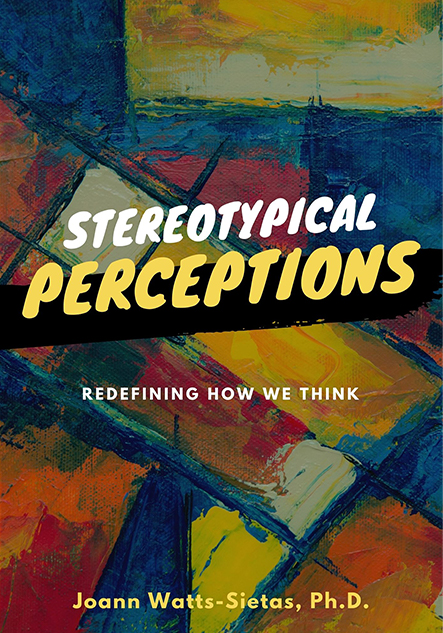
The book is a combination of readings and "orienting" chapters intended to challenge ever-changing and permanently unfinished discourse.
My hope is to engage a wide audience and immerse you, the reader from an inherited context of knowing to self-reflection.
Applying stereotype replacement learning will help recognize stereotypical responses and generate non-stereotypical alternatives.
Moreover, will also provide a framework from which you can begin to construct your own relevant understanding of the social world.

Shelly Weeks-Channel, Ph.D.
Cheyney University of Pennsylvania
A well conceived, carefully constructed, and highly readable introduction to a very complex topic.


Stereotypes
Provides a conceptual definition of the term stereotype and explains how the individual is part of the context of social judgement.
Unconscious Bias
Explores principles of social psychology and the distinction between affect and cognition as well as understanding racial bias.
The Illusion of Fairness
Examines the racial disparity in the criminal justice system, and notable studies showing how race affects sentencing outcomes.
Dehumanizing Labels
Defines the term labeling as a social construct and assist the reader in conceptualizing how giving people labels hides the real complexity.
Rationalizing Subordination
Previews the complex interrelationship with prejudice and discrimination as well as various mechanisms of stereotypical perceptions.
Social Constructs
Development of stereotypes and media application in socially constructed films, and how stereotypes are internalized and applied.